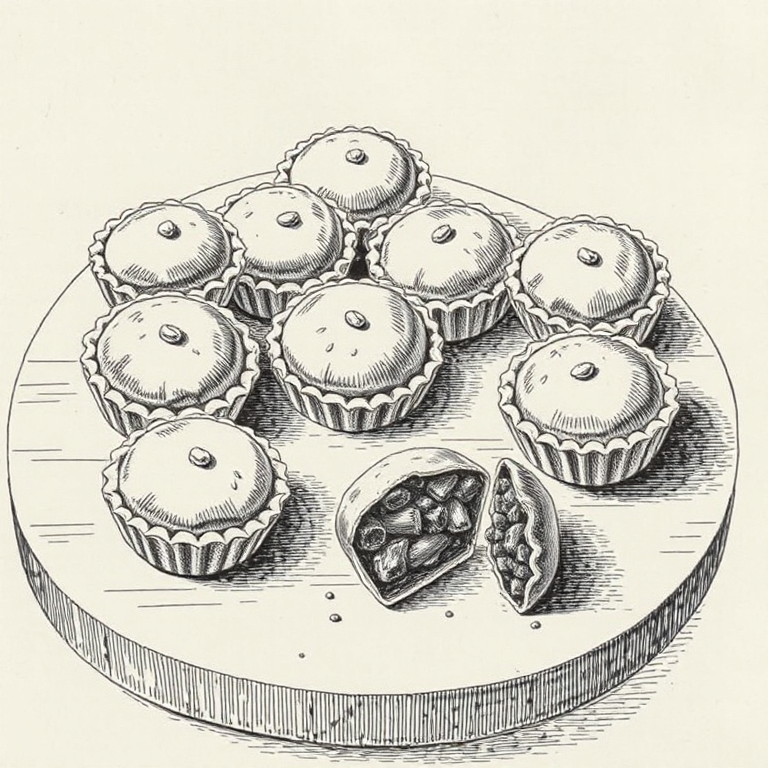
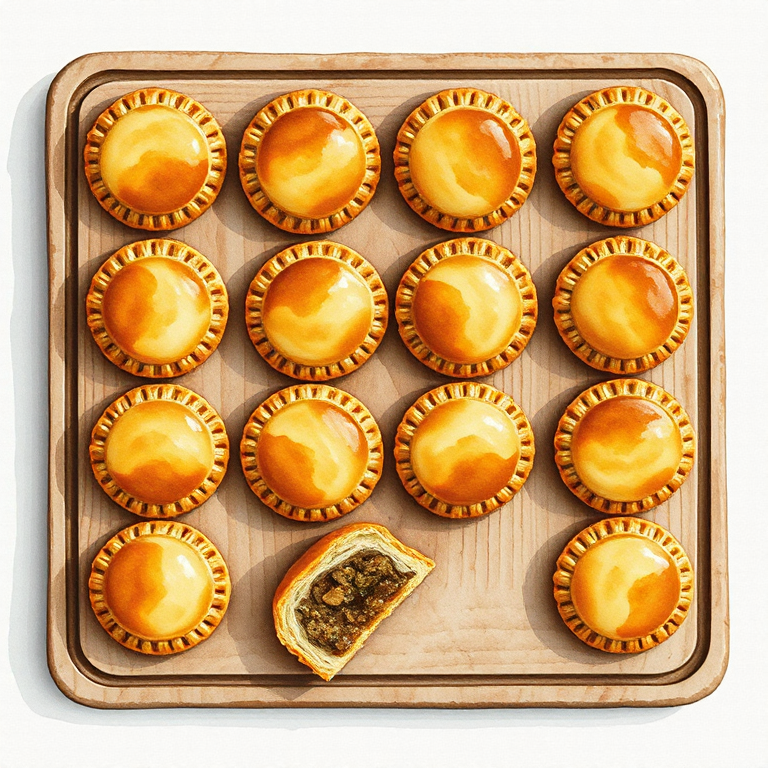
Yield and time
- Makes: 24 small pasties, 8 of each filling, plus a batch of cheese twists on the side
- Hands-on: about 2 hours assembly (rough puff made the day before)
- Total: 3 hours if you bake straight away, or “shape on the weekend, bake throughout the week” if you freeze
Ingredients
The pastry
- 2 separate batches of rough puff (about 1.2kg in total), fridge-cold. The recipe is sized for one comfortable bench session, so make two of them the day before rather than scaling the recipe up. The offcuts from cutting the pasty triangles become the cheese twists at the same bake, however many that ends up being.
The creamy chicken filling
- 6 free-range chicken drumsticks (yielding about 350g meat once stripped)
- 300ml chicken stock
- 25g salted butter
- 25g plain flour
- 100ml whole milk
- A small grating of nutmeg
- Salt and black pepper, to taste
The beef in brown gravy filling
- 1kg beef chuck or stewing steak, cubed to about 1cm
- 2 small onions (or 1 large), finely diced
- 50g salted butter
- 2 tablespoons plain flour
- 2 tablespoons tomato paste
- 2 tablespoons Worcestershire sauce
- 400ml beef stock
- 2 bay leaves
- 1 teaspoon dried thyme
- Salt and black pepper, to taste
The cheese and onion filling
- 2 large onions, finely sliced
- 50g salted butter
- 500g potato (about 2 large), peeled and diced
- 400g mature cheddar, grated
- A generous handful of chives, finely sliced
- Salt and black pepper, to taste
To finish
- 2 eggs, beaten
You’ll need a sharp knife and a ruler (or a 12cm square cutter if you have one), three or four baking trays lined with parchment (or work in batches across two trays), and a pastry brush.
Method
Pull one of the rough-puff batches (about 600g) from the fridge thirty minutes before you want to roll it, so it loses just enough chill to be pliable without going soft. Keep the second batch chilled and pull it out when the first one’s done.
While it tempers, cook the three fillings in turn, each cooling while you do the next. All three fillings must be cold before they touch the pastry; warm filling on cold rough puff melts the butter layers and you lose the lamination.
The recipe uses salted butter throughout, so go modestly on added salt and taste each filling before sealing the pasties. The butter, stock, Worcestershire, and cheddar all bring salt of their own, and an under-seasoned filling that you can fix with a pinch is easier to recover than an over-salted one you can’t.
Creamy chicken. Bring the stock (300ml) to a bare simmer in a small lidded pan. Drop in the drumsticks (6), cover, and poach over the lowest heat for thirty minutes until the meat pulls easily from the bone. Lift the drumsticks onto a board, let them cool until you can handle them, then strip the meat off, discarding the skin and bones. Tear or chop the meat into rough 1cm pieces. In the same pan, melt the butter (25g), stir in the flour (25g) to make a paste, cook for a minute, then whisk in the reserved poaching stock and the milk (100ml) a splash at a time until smooth. Simmer for three minutes, stirring, until thick enough to coat the back of a spoon and hold a line when you draw a finger through it. Off the heat, fold through the torn chicken, a small grating of nutmeg, several grinds of black pepper, and a pinch of salt. Taste and adjust. Tip into a wide bowl to cool completely. The chicken pasties will run a touch lighter on filling than the beef and cheese ones; that’s fine, the slit count tells you which is which anyway.
Beef in brown gravy. Melt the butter (50g) in a heavy lidded pan over medium-high heat. Add the cubed beef (1kg) and brown hard for seven to ten minutes in two batches if needed to avoid steaming; you want colour, not water. Drop the heat to low, tip in the diced onions (2 small or 1 large) and sweat for five minutes until soft and translucent. Stir in the flour (2 tbsp) and tomato paste (2 tbsp) and cook for a minute; it’ll smell nutty and a touch tomato-rich. Pour in the Worcestershire sauce (2 tbsp) and beef stock (400ml), then drop in the bay leaves (2) and dried thyme (1 tsp). Bring to a bare simmer, cover, and braise on the lowest heat for one hour, until the beef is fork-tender. Uncover, raise the heat, and reduce the gravy until it coats the meat and holds a line when you draw a spoon through. Fish out the bays. Season with several grinds of black pepper and a pinch of salt; taste and adjust. Tip into a wide bowl to cool completely.
Cheese and onion. Boil the diced potato (500g) in water for ten to twelve minutes until just tender. Drain hard and leave it steaming in the colander while you do the onions. Melt the butter (50g) and sweat the sliced onions (2 large) over low heat for fifteen to twenty minutes until soft, sweet, and just starting to take colour. Combine the drained potato, soft onions, grated cheddar (400g), and chives off the heat. Season with several grinds of black pepper and a small pinch of salt; the cheddar already brings a lot of salt, so go gently and taste. The potato should crush slightly as you stir; you want it broken up, not whole cubes.
Heat the oven to 200°C fan.
Roll the rough puff on a lightly floured bench to about 4mm thick. Cut twelve 12cm squares from this first batch: a sharp knife against a ruler, eyeballed if you don’t have a square cutter. Gather the offcuts into a ball and keep them aside; they’ll go into cheese twists later. Repeat with the second batch when you’re ready, for another twelve squares.
Pile a heaped tablespoon of filling onto the centre of each square, leaving a 1.5cm border. Brush the border lightly with the beaten egg; this is the glue. Fold corner-to-corner into a triangle, sealing the two open edges with a fork pressed firmly along the join so no filling weeps in the bake.
Mark each pasty by the number of steam slits on top so you can tell the fillings apart later (frozen, baked, or in a lunchbox):
- Chicken: one slit
- Beef: two slits
- Cheese and onion: three slits
Brush the tops with the rest of the beaten egg. Bake on the middle shelf for 25 to 30 minutes, until the pastry is deep gold and puffed, and the bases lift cleanly off the parchment. Bake in batches if you don’t have the tray space to fit twenty-four at once.
Cool on a wire rack for ten minutes before eating, or fully cool then store.
Gather all the offcuts, re-roll them, and turn them into a few cheese twists on the same tray of bench work, however many the offcuts allow, no need to push it. Bake them alongside the fresh pasties for the same 25-30 minutes. The twists are the day-one snack while the pasties go in the freezer.
Make ahead, freeze, bake fresh
These pasties are built for the freezer. Shape all twenty-four in one go, freeze them raw, and bake two or three at a time across the week.
Don’t egg-wash before freezing. The wash doesn’t survive and bakes patchy. Lay the shaped pasties on a parchment-lined tray, spaced so they don’t touch, and freeze for two hours until rock solid. Transfer to a freezer bag or box; the slit count on top tells you which is which without a label.
To bake from frozen: place still-frozen pasties on a parchment-lined tray, brush with beaten egg, and bake at 200°C fan for 35 minutes, ten minutes longer than the fresh-bake. The bases lift cleanly off the parchment when they’re done. Cool on a wire rack for ten minutes before eating.
Storage
Three days in an airtight tin in the fridge for already-baked pasties. Reheat at 170°C fan for ten minutes from cold; the puff crisps back up.