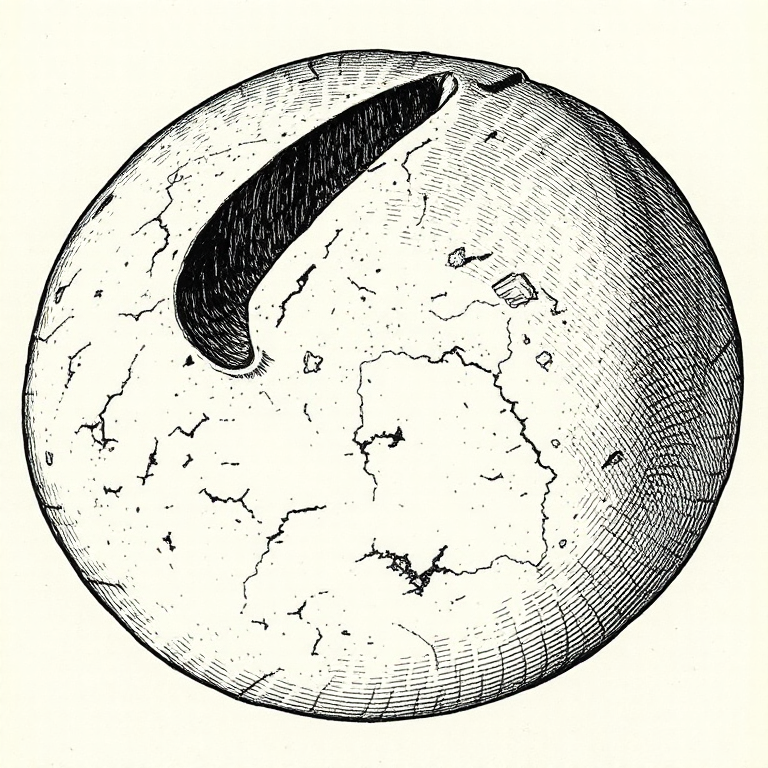
The honest truth about a country sourdough is that the recipe is the easy part. The hard part is timing: knowing when the bulk ferment has gone far enough, knowing when the shaped loaf is proofed enough to score and bake but not so much that it slumps. Those judgements come from making the same dough five or six times in a row and paying attention. This post is the recipe; the judgement is yours, and gets sharper each Sunday morning.

Goes excellently with a bowl of cream of mushroom soup: bake the boule Sunday, ladle the soup Monday, tear chunks of warm crust into the bowl.
Yield and time
- Makes: one 900g loaf
- Hands-on: 1 hour
- Total: Friday starter feed to Sunday morning bake, about 48 hours including the bulk ferment and overnight cold retard
Ingredients
- 450g strong white bread flour
- 50g wholemeal flour
- 375g water at 28-30°C (75% hydration)
- 100g active sourdough starter, fed and at peak (100% hydration)
- 10g fine salt
- A small bowl of rice flour for dusting the banneton
You’ll need a kitchen scale that measures to the gram, a large mixing bowl with a lid, a 22cm round banneton, a bench scraper, a sharp lame, and a 24cm cast-iron dutch oven with a tight-fitting lid.
Friday: feed the starter
Pull the starter out Friday morning. Feed it: 30g starter + 30g flour + 30g water, stir, leave at room temperature. Eight hours later, feed again at the same ratio. By Saturday morning the starter should be at peak rise: nearly doubled, domed on top, smelling of yoghurt and ripe fruit.
Saturday morning: autolyse and mix
09:00. Whisk the 450g white and 50g wholemeal flour together in your mixing bowl. Add the 375g warm water and mix with a wet hand until no dry flour remains. Cover, rest for 45 minutes.
09:45. Add the 100g starter and the 10g salt to the autolysed dough. With a wet hand, pinch and fold the dough repeatedly for about three minutes, working the salt and starter through until evenly distributed. Cover.
Saturday morning to afternoon: bulk ferment with folds
The bulk ferment runs about five to eight hours from the mix depending on kitchen temperature. Watch the dough, not the clock.
Three sets of stretch-and-folds, 30 minutes apart, in the first 90 minutes of the bulk:
10:00. Wet your hand. Reach under one side of the dough, pull it up and stretch it over the top. Rotate the bowl 90 degrees, repeat. Four pulls total. Cover.
10:30. Second fold, same way.
11:00. Third fold. By now the dough should hold its shape rather than slump, and the surface should look smooth and slightly domed.
After the third fold, leave the dough to bulk undisturbed. You’re looking for:
- Roughly 50-75% rise from the original volume.
- The surface domed and slightly jiggly when you nudge the bowl.
- A few small bubbles visible at the surface and along the sides.
- A finger poked into the dough leaves an indent that springs back slowly, but not entirely.
Saturday late afternoon: pre-shape and shape
Tip the dough onto a lightly floured bench.
Pre-shape. Using a bench scraper and a lightly floured hand, gently round the dough into a ball by tucking the edges underneath. Cover with the upturned bowl, rest for 25 minutes.
Final shape. Flour the top of the pre-shaped ball lightly and flip it upside down. Stretch each side of the dough outwards a hand-width, then fold it back over the top: left side over, right side over, top down, bottom up, like wrapping a parcel. Flip the parcel over so the seams are underneath, and use the bench scraper plus your other hand to drag it across the bench in tight circles, building surface tension on the smooth top.
Dust the banneton generously with rice flour. Lift the shaped boule and lower it into the banneton seam-side up. Pinch the seam closed a touch if it’s loose.
Saturday night: cold retard
Cover the banneton with a shower cap, into the fridge overnight. Twelve to sixteen hours at 4°C is the target.
Sunday morning: bake
08:00. Pull the empty dutch oven (lid on) into the oven and set the oven to 250°C fan. Forty-five minutes minimum; an hour is better.
09:00. Pull the banneton out of the fridge. Cut a square of parchment a touch larger than the loaf and lay it over the top of the banneton. Lay a flat plate on top, then flip the whole thing over. Lift the banneton off; the loaf should release cleanly onto the parchment, seam-side now down.
Score. With a sharp lame held at a low angle, make one decisive curving cut across the top, about 1cm deep.
Pull the dutch oven out of the oven, lift the lid. Lift the parchment by the corners, lower the loaf into the dutch oven. Lid back on, straight back into the oven.
Bake.
- 20 minutes lid on, 250°C fan.
- Lid off, drop temperature to 220°C fan, 25 minutes more.
The loaf is done when the crust is deep brown, the bottom sounds hollow when tapped, and a probe in the centre reads 96-98°C.
Onto a wire rack. Do not cut for at least an hour.
Storage
Cut side down on a board, covered with a tea towel, the boule keeps three days. Past that, slice and freeze. Don’t refrigerate it.
Troubleshooting
Flat loaf, dense crumb. Usually overproofed during bulk or underproofed during cold retard. Pull the bulk earlier next time; trust the 50-75% rise marker over the clock.
Tight crumb, no open holes. Underproofed bulk, or the dough was shaped too tightly. Let the bulk go longer, or skip the third fold next time so the dough retains more air.
Cracked sides, no clean ear. The score didn’t open enough, so the loaf burst where the dough was weakest. Score deeper, or at a lower angle.
Pale, soft crust. The dutch oven wasn’t hot enough at the start, or the lid came off too early. Preheat longer; respect the lid timing.
Sour, vinegar-sharp. Too long a cold retard. Pull at 12 hours instead of 18 next time, or feed the starter more recently before the bake so the lactic acid bacteria have less ahead of them.
The discard
Sourdough is a Sunday loaf because the starter wants feeding twice a week minimum. The off-cuts of starter (the bit you’d otherwise throw out when feeding) go into the sourdough discard cookie dough that lives in the freezer for the weeks the bread doesn’t happen.