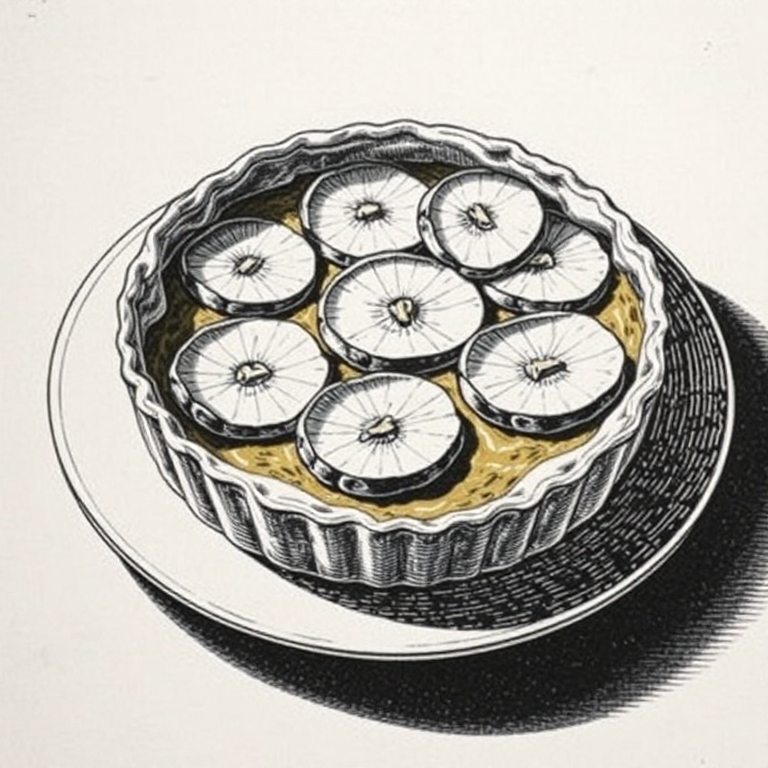
Tarte tatin is cooked upside down (caramel and apples in the pan, pastry as a lid), so by the time you flip it the apples have soaked through with caramel and the pastry sits crisp underneath. A good one gets the caramel to a deep amber, not just gold, and the apples to the point where they hold their shape but yield completely to a spoon. The rough puff from a few weeks ago is the right pastry: laminated puff is overkill, and shortcrust slumps under the caramel.

Yield and time
- Makes: one 24cm tarte tatin, serves 8
- Hands-on: 45 minutes
- Total: 1 hour 30 minutes (including the 35-40 minute bake and a 5-minute rest before the flip)
Ingredients
The base
- 400g rough puff pastry (one rectangle from the rough puff card)
The filling
- 8 medium apples (about 1.2kg), Pink Lady and Granny Smith
- 100g caster sugar
- 50g unsalted butter, cubed
- A squeeze of lemon juice
- ½ teaspoon flaky sea salt
- 1 vanilla pod, split
To serve
- Cold pouring cream
You’ll need a 24cm heavy ovenproof cast-iron pan.
Prep the apples
Peel, halve, and core the 8 apples (about 1.2kg). Trim a thin sliver off the curved back of each half so it sits flat in the pan when laid cut-side up. Toss the prepared halves with a squeeze of lemon juice in a bowl as you go.
Roll the 400g rough puff out to a 4-5mm thick sheet. Lay your pan upside down on the pastry and cut a disc 2cm wider than the rim. Slide the disc onto a parchment-lined tray, prick all over with a fork, into the fridge while you do the caramel. A cold pastry lid is critical.
The caramel
Heat the oven to 200°C fan.
Spread the 100g sugar evenly across the bottom of the pan. Set over medium heat. Don’t stir. Watch and wait. The sugar will melt around the edges first, then sweep inward. If one side is melting faster than the other, swirl the pan gently to even it out.
When most of the sugar has melted and the colour is amber (not just gold), add the 50g cubed butter all at once. It will bubble dramatically. Swirl until the butter and caramel come together into a glossy sauce. Pull off the heat. Stir in the ½ teaspoon flaky salt and the seeds scraped from the vanilla pod.
Build and bake
Working quickly while the caramel is still molten but not bubbling, arrange the apple halves cut-side up in a tight ring around the rim of the pan, leaning each one slightly so they pack densely. Fill the centre with a few more halves arranged into a rosette. Pack them tighter than feels reasonable.
Set the pan back on a medium heat for 10 minutes. Tilt the pan and baste the apples with the caramel-juice with a spoon a couple of times during these ten minutes.
Pull the disc of pastry from the fridge. Lay it over the apples. Tuck the 1cm overhang down inside the pan around the apples.
Into the oven on the middle shelf. 35 to 40 minutes, until the pastry is deep gold and you can see the caramel bubbling vigorously through any small gaps.
The flip
Pull the pan out. Set it on a heatproof surface and rest for 5 minutes, not longer.
Have your serving plate ready. Lay the plate upside down on top of the pan. Holding the pan handle with an oven cloth and the plate firmly with your other gloved hand, flip in one decisive motion. Set on the bench. Wait ten seconds. Lift the pan off slowly; the tatin should release cleanly. If an apple half sticks to the pan, lift it off with a spoon and place it back into the gap on the tart.
To serve
Warm, with cold cream.
What goes wrong
Caramel too dark, almost burnt. The sugar went past amber. Pull from the heat the second the colour reads deep amber; it will keep cooking on residual heat.
Watery tart, soft pastry base. Skipped the 10-minute hob pre-cook, or under-baked.
Apples mushy, formless. Over-baked. Forty minutes maximum in the oven; forty-five if you must.
Apples sticking to the pan when flipping. You waited too long, the caramel cooled. Warm the pan gently on a low flame for thirty seconds before re-trying the flip.