Greenbox has a board pack, a risk register, and an independent director who asks questions nobody else will. The Series B pitch is in motion. But the governance that investors see today was built in stages, each one feeling like a loss to Maya before it started feeling like a gain.
Stage 1: No board
For the first fourteen months of Greenbox, the board was Maya.
Not formally. There was no board. There was no governance. There was a founder who made every decision, a technical co-founder who was consulted on technical decisions, and an operations person who was consulted on operations decisions. The word “consulted” is doing heavy lifting in that sentence. Maya asked Tom and Sam what they thought. Then Maya decided.
This worked. At five people, it worked beautifully. The feedback loop was tight, a decision made at 9am was implemented by noon. Nobody waited for approval. Nobody prepared a document for review. Maya had the context, the relationships, and the authority. She decided, the team built, the customers received their boxes.
The decision-making model was the same one Maya’s parents used on the farm. One family. One brain. Every decision routed through the person who knew the most. Her father decided what to plant, when to harvest, which wholesaler to use, when to take a risk on a new crop. Her mother decided everything else, the books, the supplies, the relationships with the other farming families. Between them, they held the entire operation.
Maya inherited this model without noticing. She was the farmer. The company was the farm. Every decision was hers because every decision felt like hers.
Stage 2: The advisory layer
Angela Park invested $150K in Greenbox’s seed round at a startup networking event in Perth. She wrote a cheque based on a twenty-minute conversation, a handshake, and what she later described as “the look in Maya’s eyes when she talked about the farms.”
Angela didn’t ask for a board seat. She asked for monthly catch-ups over coffee. Maya agreed because Angela was friendly and experienced and had just given her half a million dollars. The catch-ups happened at a cafe in Fremantle, the one near the fishing boat harbour that Ren also liked, the one with the too-strong flat whites and the view of the Norfolk pines.
Angela asked good questions. Not directive questions, not “you should do X” or “why haven’t you done Y.” Curious questions. “What are your customers telling you this month?” “What’s the biggest thing you’re worried about?” “If you had to cut one thing, what would it be?” She listened more than she talked. She made suggestions framed as questions. She never told Maya what to do.
Charlotte joined the advisory layer six months later, introduced through the Business Model Canvas work. Lee was already advising on delivery practices, he’d been involved since the first retrospective. Together, the three advisors formed an informal circle around Maya: Angela on the business, Charlotte on the engineering and process, Lee on the practices.
They never met together. They never coordinated. They each had their own relationship with Maya, their own cadence, their own lens. Angela saw the financials. Charlotte saw the team dynamics. Lee saw the practices. Maya sat at the centre and pulled their perspectives together into decisions.
This worked too. Not perfectly, the perspectives sometimes conflicted, and Maya was the only person who held the full picture. But for a company of fifteen people, the advisory model was enough. The advisors provided wisdom. Maya provided judgement. The team provided execution.
Stage 3: Formal governance
The shift started with the management gap. Diane Kerrigan arrived, assessed the company, and told Maya she had twenty-five people and zero managers. The management layer was the first structural change. The board was the second.
Angela pushed for it. Not because the informal catch-ups weren’t working, they were. But because the Series B investors would require governance, and governance couldn’t be assembled in a weekend.
“You need an independent director before you raise,” Angela said, during one of their Fremantle catch-ups. “Not because investors require one, though they do. Because you need someone in the room who has no financial stake and no emotional stake. Someone who asks the questions that everyone else is too close to ask.”
Maya understood the concept. She didn’t understand why it felt threatening.
“An independent director is someone I don’t know, judging decisions I’ve made.”
“An independent director is someone who makes your decisions better by pushing back on them.”
“That’s the same thing, said nicely.”
Angela smiled. “Yes. That’s why it works.”
Patricia Osei joined the board three weeks later. Angela found her through the director network she’d been part of for fifteen years. Patricia was fifty-two, a former COO of a consumer goods company, currently an independent director on three other boards. She had no investment in Greenbox. No personal relationship with Maya. No prior knowledge of the produce-box industry. She had twenty-five years of experience watching companies grow, struggle, and occasionally break.
Patricia’s first action was to read everything. Not selectively, everything. The financial statements, the subscriber data, the churn reports, the ADRs, Charlotte’s quarterly health check results, the Event Storm photos, the planning onion on the wall. She spent a day in the Perth office. She asked to see the warehouse. She spoke to Sam about logistics, to Tom about architecture, to Jas about the customer experience. She even called Dani Stavros at ColdRun, which nobody expected.
At her first formal meeting, Patricia said: “You have excellent practices and terrible governance. The practices will get you to product-market fit. The governance will determine whether you survive past it.”
Maya didn’t argue. Patricia was right, and the directness was a relief after months of everyone being polite about the same problem.
Patricia’s questions
Patricia’s approach to board membership is built on questions, not advice. She doesn’t tell Maya what to do. She asks questions that reveal what Maya hasn’t considered.
Her first question, on her first day in the Perth office, was: “Who leaves if Maya gets sick for three months?”
Nobody had asked this. The answer was: probably everyone, because every decision above squad level routes through Maya, and three months of decision vacuum would stall the company.
Her second question: “What agreements exist with your farms that aren’t in writing?”
Sam looked at Maya. Maya looked at the ceiling. Dave Morrison’s supply arrangement was a handshake. Rachel’s was a verbal agreement made over a kitchen table. Three of the seven Perth farm relationships had no written contract at all. They were trust, history, and Maya’s personal relationship with each farmer.
“All of those relationships are assets,” Patricia said. “They appear nowhere on the balance sheet, they’re not mentioned in the investor materials, and they evaporate if Maya leaves. They’re also the thing that makes Greenbox different from every other subscription box company. If you don’t formalise them, you’re one departure away from losing your competitive advantage.”
Maya bristled. “I’m not going to ask Dave to sign a contract. That’s not how we work.”
“I’m not suggesting a contract. I’m suggesting documentation. A simple letter of intent. A relationship summary. Something that exists outside your head, so that when a Series B investor asks ‘what protects your supply chain?’, the answer isn’t ‘Maya knows everyone personally.’”
Patricia wasn’t wrong. Maya knew she wasn’t wrong. The resistance was emotional, not rational, the same pattern Charlotte had identified in the management gap conversation, the same instinct that had kept the domain locked in Maya’s head until the Event Storm put it on the wall.
The first real board meeting
The first formal board meeting was held in the Perth office on a Thursday afternoon in November. Present: Maya (founder and CEO), Angela (seed investor), Patricia (independent director), and Diane (advisor, non-voting). Charlotte attended by invitation to present the team health check.
Maya had prepared a board pack, forty-seven pages, which she and Diane had spent two weeks assembling. Financial summary. Subscriber metrics by city. Churn analysis. Revenue per box tier. Operational dashboard. Risk register. Strategic priorities for the next quarter. Appendix with ADRs, team health check results, and the planning onion.
Patricia read the pack in advance. She arrived with three pages of notes and fourteen questions.
The meeting lasted three hours. Two of those hours were spent on the risk register, a document Maya had never created before and that Patricia considered the most important section of the pack.
“Every company has risks,” Patricia said. “The ones that survive name them. The ones that don’t, discover them too late.”
The risk register listed eleven items. Key person dependency was number one. That finding led directly to the key person insurance work. Technology scalability was number three, the single staging environment, the deploy queue that backed up when three squads shipped simultaneously. Customer concentration was number seven, 40% of revenue came from Perth, which meant a Perth-specific disruption could halve the business.
Patricia asked about each risk. Not “what are you going to do about it?” but “how did you discover this?” and “who else knows?” and “what would have to change for this to move from amber to green?” Her questions weren’t attacks. They were audits, careful, thorough examinations of whether the company understood its own vulnerabilities.
Maya found the experience excruciating and essential. Excruciating because every risk was something she’d been carrying alone, and hearing them listed in a boardroom felt like being publicly diagnosed. Essential because the diagnosis was accurate, and accuracy is the prerequisite for treatment.
After the meeting, Maya sat in the small meeting room alone. The Event Storm photos watched from the wall. She texted Ren: Had the first real board meeting. Feel like I’ve been through a medical exam.
Ren replied twenty minutes later: Did they find anything?
Eleven risks. Key person dependency number one.
Are you the key person?
I’m three of the eleven.
A pause. Then: Better to know.
Better to know. Maya put her phone down and looked at the risk register. Eleven items. Three of them were her, her knowledge, her authority, her farm relationships. The board had named what she’d been carrying. Naming it didn’t make it lighter. But it made it shared.
Stage 4: Investor governance
The Cerulean Ventures Series B, the one Maya pitched in Sydney, comes with a board seat. Standard term sheet provision: the lead investor gets a representative on the board.
The board goes from three to four: Maya (founder), Angela (seed), Cerulean partner, Patricia (independent). The dynamics change immediately.
With Angela and Patricia, Maya was reporting to people who trusted her by default. Angela had invested based on a handshake and a conversation. Patricia had joined because she believed in the company’s trajectory. Both of them asked hard questions, but from a position of faith. They assumed Maya knew what she was doing and wanted to help her do it better.
The Cerulean partner, a woman named Jennifer Liu, forty-one, former McKinsey, current GP at the fund, has a different relationship with Maya. Jennifer has a fiduciary obligation to the fund’s limited partners. Her job is to protect $8M of other people’s money. She’s friendly, competent, and rigorous, and her questions have an edge that Angela’s don’t.
“What’s the path to cashflow positive?”
“What’s the customer lifetime value by city and how does it change if you remove Perth?”
“If the Hartland Group partnership doesn’t close, what’s Plan B?”
“Why is the Adelaide churn rate higher than the other cities and what are you doing about it?”
Maya answers every question. She has the data, the board pack, the runway model, the scenario analysis that Charlotte helped build. But the experience of being questioned by someone with $8M at stake feels different from being questioned by someone who invested $150K on a handshake.
The first board meeting with Jennifer lasts four hours. Maya drives home to Fremantle afterwards and sits in the car in the driveway for ten minutes before going inside. Nadia finds her there.
“How was it?”
“Like being cross-examined by someone who actually read the evidence.”
“Is that bad?”
Maya thinks about it. “No. It’s exactly what a board should be. I’m just not used to it yet.”
What Maya loses
The hardest part of board evolution isn’t the governance structures or the board packs or the risk registers. It’s the shift in Maya’s relationship with her own company.
At stage 1, Maya decided everything. The company was an extension of her judgement. Every success was hers. Every failure was hers. The boundaries between Maya and Greenbox were invisible because they didn’t exist.
At stage 2, the advisors broadened her perspective but didn’t constrain her authority. Angela suggested. Charlotte coached. Lee guided. Maya decided. The company was still hers, informed by others.
At stage 3, Patricia started asking questions that challenged Maya’s decisions. Not overriding them, an independent director doesn’t have that power. But naming the risks Maya hadn’t named. Questioning the assumptions Maya hadn’t questioned. The company was still Maya’s, but the decisions were no longer private.
At stage 4, Jennifer represents capital that expects returns. The board doesn’t direct Maya’s decisions, the founder retains operational control, per the term sheet Charlotte and Diane negotiated. But the board approves strategy, signs off on major expenditures, and holds Maya accountable for outcomes. Maya recommends. The board approves. The word “approves” means the decision is no longer entirely hers.
Maya experiences this as a loss. She sits on the bench in Fremantle with Ren, the fishing boats, the thermos of green tea, and says: “I used to decide everything. Now I recommend and wait for permission.”
Ren pours tea. “Is that what’s happening?”
“That’s what it feels like.”
“Feelings and facts aren’t always the same view.”
Maya knows this. She’s been told this by Charlotte, by Diane, by Angela. The board isn’t taking her authority. The board is adding accountability. Those are different things.
But the feeling persists. The company she started in a room above a cafe, the company that was five people and two hundred subscribers and a whiteboard with sticky notes, that company was hers in a way that a company with a four-person board and a Series B investor and a 47-page board pack can never be.
“You’re not losing control,” Charlotte says, in a Monday morning conversation that Maya requested because the feeling wouldn’t let go. “You’re gaining accountability. The difference is: control means nobody can stop you. Accountability means somebody checks your work. Companies that survive have the second one. Companies that die spectacularly have the first one.”
“Give me an example.”
“WeWork.”
Maya is quiet. She doesn’t need a second example.
What Maya gains
The gains arrive slowly and without announcement.
The first gain: Patricia catches a supplier contract that would have cost Greenbox $340K over three years. The contract was with a new courier service for Brisbane, terms that looked competitive, pricing that was 15% below the market rate. Patricia asked to see the penalty clauses. The penalty for early termination was four years’ revenue, buried on page nineteen. “This is a lock-in contract disguised as a discount,” Patricia said. Sam renegotiated. The new terms saved $340K.
Maya would not have caught that. She doesn’t read page nineteen of courier contracts. That’s not a criticism, it’s a recognition that a four-person board covers more ground than one founder.
The second gain: Angela sees a partnership opportunity that Maya has been dismissing. A national food distributor. Hartland Group, has approached Greenbox three times. Maya has declined each time because she doesn’t trust large distributors. Her parents sold their produce through a distributor who squeezed their margins until the farm was unviable. The association is personal and deep.
Angela, who has no such association, looks at the Hartland proposal objectively. “The terms are fair. The distribution reach is national. The brand protection clauses are stronger than anything I’ve seen in this space. Your hesitation is understandable. Your rejection isn’t data-driven.”
Maya doesn’t agree immediately. But she agrees to meet Hartland Group, which she wouldn’t have done without Angela’s push. The meeting leads to a conversation, which leads to a negotiation, which leads to the partnership that eventually appears in the story.
The third gain: Jennifer’s rigour improves the company’s financial discipline. The scenario models. The “what happens if churn increases by 20%” analysis. The numbers re-run against three different futures instead of one. These aren’t board requirements, they’re good business practice that the board’s expectations make necessary. Maya starts thinking in scenarios instead of snapshots. The 5am balance check is replaced, gradually, by a Monday morning runway review.
The distance between the two meetings
The first board meeting was Maya, Tom, and Angela at a cafe in Fremantle. Coffee and croissants. No agenda. No minutes. Angela asked how things were going and Maya told her. Tom mentioned a technical challenge and Angela said “that sounds hard” in a way that was genuine. The meeting lasted forty-five minutes and ended with a handshake.
The most recent board meeting had four directors, a 47-page board pack, fourteen prepared questions from Patricia, a financial scenario model from Diane, a team health check from Charlotte, and a two-hour discussion about the key person risk that ended with three action items, two deadlines, and a follow-up meeting scheduled for the following month.
The distance between those two meetings is the distance between a startup and a company. The startup had trust and informality and a founder who held everything. The company has structure and accountability and a founder who shares the burden.
Maya misses the cafe sometimes. The croissants. The simplicity. The feeling that the company was hers and the future was open and nobody was going to ask her about penalty clauses on page nineteen.
But she doesn’t miss the 5am dread. She doesn’t miss the feeling that every decision rested on her alone. She doesn’t miss the silence of carrying risks that nobody else could name.
The board grew up because the company required it. Maya grew up with it. Not gracefully. Not without resistance. But with the recognition, hard-won, slowly earned, that a good board makes you better, not smaller.
“You’re still the founder,” Ren told her, on the bench, with the tea. “The board doesn’t change that. It changes what being the founder means.”
“What does it mean now?”
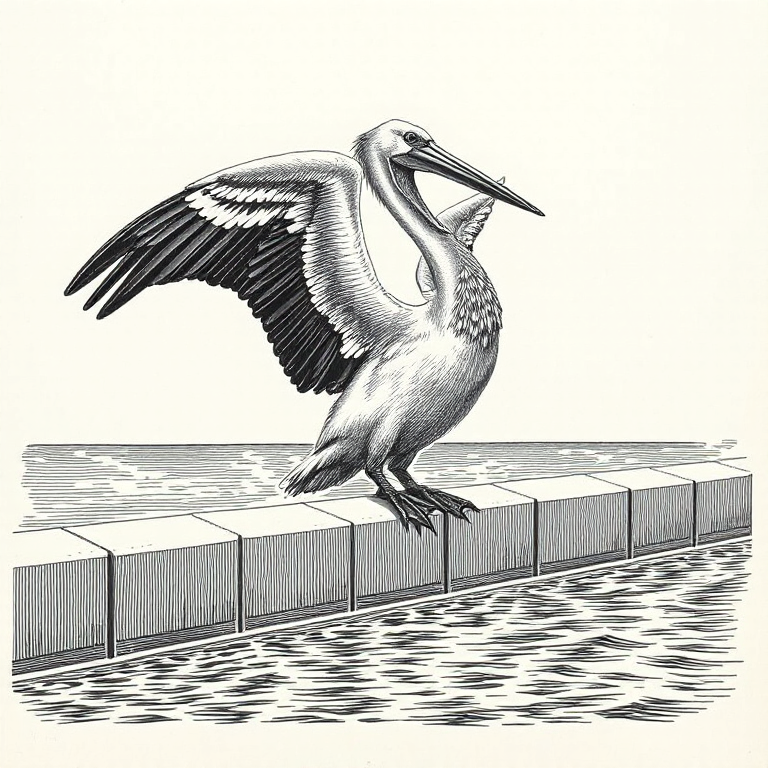
Ren considered this. A pelican landed on the harbour wall and folded its wings with the deliberate slowness of something that has nowhere to be.
“It means you’re not alone.”
Maya sat with that. The harbour. The pelican. The tea cooling in the ceramic cup. She thought about her parents, alone on the farm, alone with every decision, alone when the subdivision signs went up. They had no board. No advisors. No independent director asking about penalty clauses. They had each other, and it wasn’t enough.
“That,” Maya said, “might be the whole point.”