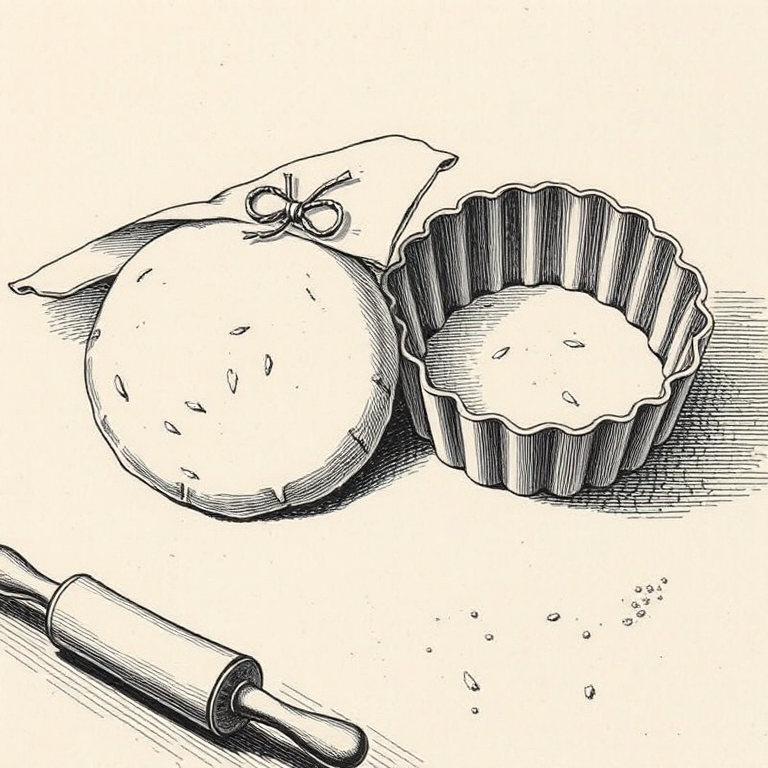
The standalone pastry recipe used in Lemon Meringue Pie, but worth the post on its own. Make it once, freeze the disc, and you’ve got a tart shell ready for whatever the week brings – fruit tarts, custard tarts, mince pies, dessert cases.
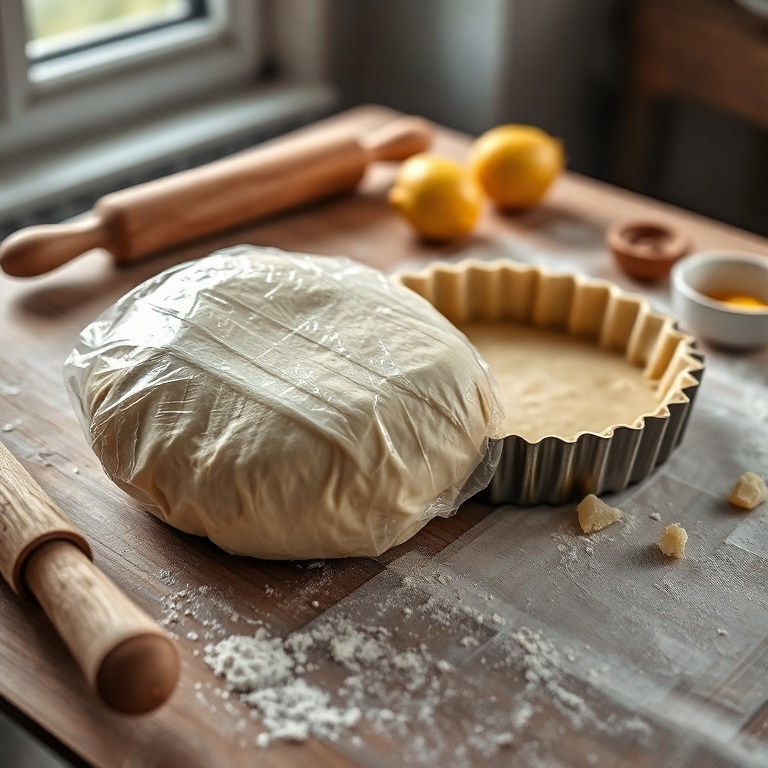
Ingredients (one 23cm tart shell, or 8-10 tartlets)
- 250g plain flour
- 100g icing sugar
- pinch of salt
- zest of 2 lemons (or 1 orange, or 1 vanilla pod’s worth of seeds)
- 150g cold unsalted butter, cubed
- 1 large egg yolk
- 2 tablespoons ice-cold water
You’ll need a food processor, cling film, and a fridge with at least an hour to spare.
The cook
I drop the 250g flour, 100g icing sugar, the pinch of salt, and the zest of 2 lemons into the food processor and pulse for a few seconds to combine. Blender pastry is an excellent shortcut: blitzing keeps the butter cold and stops my hands warming the dough.
I add the 150g cold butter and pulse until the mixture looks like fine breadcrumbs, then the egg yolk and the 2 tbsp cold water and pulse a few times more. The mixture won’t actually clump in the processor – it’ll go from breadcrumbs to slightly soft and just-tacky and that’s the moment to stop. Going further turns it into a tough ball.
I tip the soft, loose mixture onto the bench, gather it with my hands and press it together into a rough ball, then flatten that into a disc. Two or three movements only – the less I work it, the shorter the bite. Wrap and into the fridge for at least an hour. Resting lets the gluten relax so the pastry doesn’t shrink in the oven, and gives whatever zest you’ve used time to perfume the dough.
Rolling and lining
This is short pastry, so it’ll feel short – crumbly when rolling, prone to cracking, more like a slab than a sheet. That’s the high butter ratio doing its job, and it’s what gives the bake its delicate snap; the trade-off is that the dough takes faith to handle. Believe in it. The patches and cracks bake back together into a single smooth shell.
I roll the chilled pastry out between two sheets of cling film to about 3mm thick (the cling film stops it sticking and means no extra flour, which would toughen it). I peel the top sheet off, flip the pastry into the tart tin, peel off the second sheet, and ease it into the corners. Trim the overhang with the rolling pin rolled across the top of the tin – a clean cut without scraps.
If the pastry tears, patch with a scrap; warmth from your fingers makes it pliable enough to mend. A short dough always tears somewhere; the patches disappear in the bake.
Blind baking
I prick the base with a fork (stops it ballooning), line with parchment and baking beans, and blind bake at 180°C for 15 minutes – baking the empty shell first so a wet filling doesn’t make the bottom soggy. I pull the parchment, brush the inside with a little egg white (it seals the pastry against any wet filling), and put it back for another 8 minutes until the base is golden and dry.
Cool completely before filling.
Variants and storage
- Orange or vanilla instead of lemon zest – match the zest to the filling that’s coming.
- Almond pâte sucrée – replace 50g of the flour with ground almonds. Lovely with stone-fruit fillings.
- Cocoa sucrée – replace 25g of the flour with cocoa powder. Works under chocolate ganache or a cherry filling.
The disc keeps in the fridge three days, and freezes well for three months – defrost overnight in the fridge before rolling.
Where the pastry goes
- The lemon meringue pie – its most demanding job
- Custard tart, treacle tart, fruit tarts, mince pies
- Tartlets baked blind, then filled with crème pâtissière and topped with whatever’s in season
- Lined into a buttered cake tin and used as a sweet base under a cheesecake mix