Fiction. The company and its numbers are invented; the technique is not.
Sam’s alarm goes off at 5:45am. She picks up her phone before her feet touch the floor.
Forty-three new emails since midnight. She scrolls through the subject lines in the blue light of the screen, sorting them in her head the way she’s done every morning for the past year. Delivery queries. Substitution complaints. A billing issue. Someone asking if Greenbox delivers to Mandurah. Someone asking where their box is. Someone asking where their box is. Someone asking where their box is.
She showers with her phone on the bathroom counter, checking it twice through the glass.
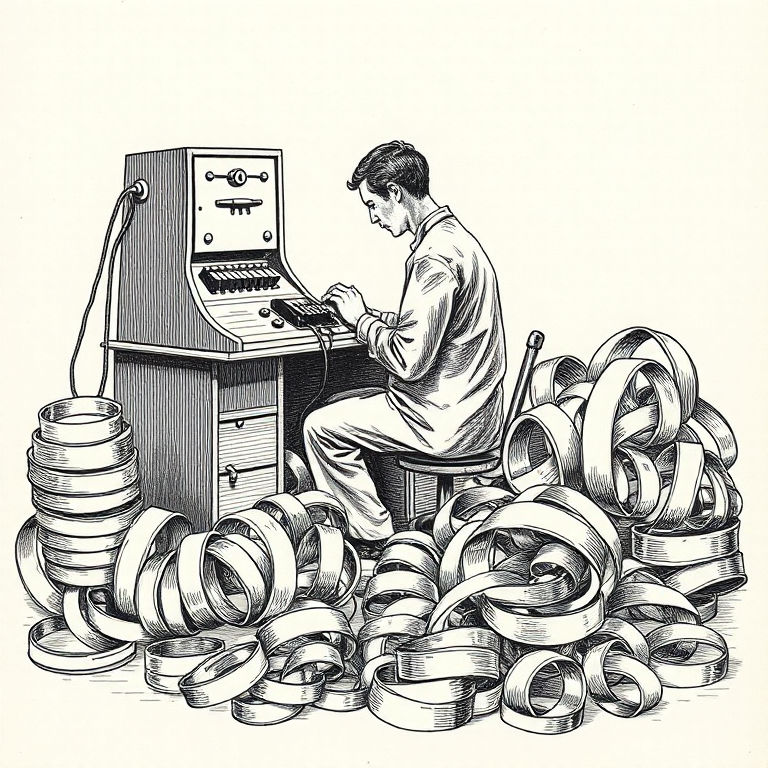
By the time she arrives at the office at 7:30, the count is sixty-one. She opens her laptop and the inbox unfolds like a wall. Eight hundred and forty-seven unread emails. Some are from today. Some are three days old. The three-day-old ones are the ones that keep her up at night, because those people have been waiting three days and every hour that passes makes the eventual reply harder to write.
Sam opens the oldest unread email. It’s from a subscriber in Claremont. “Hi Sam, I received my box last Thursday but the avocados were brown inside. I don’t want to complain but this is the second time. Can you let me know what’s going on? Thanks, Meredith.”
Meredith. Sam knows Meredith. Subscriber since month two. Orders the large box. Has a daughter with coeliac disease. Sam remembers because she manually flagged Meredith’s allergen profile in the early days, before the system handled it.
At two hundred subscribers, Sam knew everyone. She replied to Meredith within the hour, personally, because Meredith was a person and not a ticket number. At five and a half thousand subscribers, Meredith’s email sat unread for three days because it arrived on the same Tuesday that seventy-four people emailed asking where their Melbourne boxes were.
Sam starts typing. The reply takes four minutes, she needs to check the farm supply log, verify which batch had the avocados, compose something that sounds human and not like a template. Multiply four minutes by eight hundred and forty-seven emails. That’s fifty-six hours of work sitting in her inbox.
She gets through twelve replies before the phone rings.
The pattern Sam notices
On Thursday, Sam does something she’s been meaning to do for weeks. She stops replying for an hour and starts categorising.
She opens a spreadsheet and goes through the last two hundred emails, tagging each one. The categories emerge quickly, because Sam has been reading these emails for a year and the patterns live in her body even if she hasn’t written them down.
Sam stares at the spreadsheet. Forty percent. Forty percent of her inbox is people asking where their box is. That’s eighty-two emails in one week, twelve a day, and the answer is almost always the same: the courier is running late, or the box was delivered while you were out, or the tracking hasn’t updated yet.
Eighty-two emails that a delivery tracking page would eliminate entirely.
Another 22%, billing changes, pausing, skipping, are things subscribers could do themselves if the account page let them. Sam handles these by logging into the admin panel and clicking buttons. She’s a human wrapper around a feature that doesn’t exist yet.
She walks over to Charlotte’s desk. Charlotte is reviewing Priya’s contract test results from the cross-squad coordination work.
“I need to show you something,” Sam says.
Support as signal
Charlotte looks at the spreadsheet for thirty seconds. Sam can see her doing the mental arithmetic.
“Sixty-two percent of your inbox is answerable by software that already exists or should exist.”
“Yes.”
“How long have you been running at this volume?”
“Since Melbourne launched. Most of a year now.”
Charlotte leans back. “How are you?”
The question catches Sam off guard. People ask her about the emails. They ask her about the metrics. They don’t ask how she is.
“I’m tired,” Sam says. And then, because Charlotte is looking at her in a way that invites honesty: “I’m really tired. I used to know every subscriber’s name. I used to reply within the hour. Now I’ve got three-day-old emails from people I’ve never met and I feel like I’m failing all of them.”
Charlotte is quiet for a moment.
“You’re not failing. You’re a bottleneck, and that’s not the same thing. The system grew around you and nobody scaled the support the way we scaled the squads.”
Sam nods. Her eyes are hot but she doesn’t cry. She cried in the car park once, during the delivery tracking crisis, and she decided that was enough.
“The instinct is going to be to hire someone,” Charlotte says. “And you might need to. But before we hire, let’s fix the product. Sixty-two percent of these emails exist because the product is missing features. Hiring someone to answer the same eighty-two ‘where’s my box’ emails doesn’t fix the problem. It just means two people are doing work that software should do.”
The fix-first approach
Charlotte brings the spreadsheet to the next cross-squad planning session. She projects it on the wall. Tom reads the numbers. Priya reads the categories. Maya reads the “Could self-service fix this?” column and goes quiet.
“We’ve been treating support as Sam’s job,” Charlotte says. “It’s not. It’s a product problem, and Sam has been absorbing the cost of it by hand.”
The room is silent for a moment. Then Tom: “The delivery tracking is already live. The third-party platform we chose last month. Subscribers get SMS notifications. Why are people still emailing?”
Sam has the answer ready. “The notifications go out when the courier scans the box. But the couriers don’t always scan on time. So subscribers get the notification after they’ve already emailed me. And the tracking link is in the confirmation email from a week ago, nobody can find it.”
“Put it on the account page,” Priya says. “Big button. ‘Track my box.’ Current status, last scan time, estimated delivery window.”
“That’s three days of work,” Tom says. “Maybe two with the LLM.”
Charlotte writes it on the board. “Item one. Delivery tracking on the account page. Kills forty percent of support email.”
They work through the list. Account self-service, pause, skip, change address, update payment, already exists in the admin panel. It just needs a subscriber-facing interface. Tom estimates a week. That kills another 22%.
Substitution notifications are harder. The subscriber gets an email on Thursday morning listing what’s in the box, but the substitutions aren’t explained. If you expected broccoli and got cauliflower, you don’t know why. Sam fields thirty-four of those emails a week.
Jas, who has been listening quietly, speaks up. “What if the Thursday email showed the substitutions? ‘Your box this week: broccoli was swapped for cauliflower because our farm supply was short. Here’s a recipe that works with cauliflower.’”
Sam looks at Jas like she’s just solved a three-month headache. “That would cut the substitution emails by two-thirds. Most people aren’t upset about the substitution, they’re confused about why it happened.”
Charlotte updates the board:
Two weeks of development. A hundred and forty-five fewer emails per week. That’s 70% of Sam’s inbox.
The thirty percent that remains
Charlotte draws a line under the numbers. “The other thirty percent can’t be automated. Quality complaints. Damaged produce. Confused subscribers. Unusual situations. Those need a human.”
Sam nods. “Those are also the ones I’m good at. Meredith’s avocados. The subscriber whose delivery driver left the box in the rain. The person who wants to know if we can source native limes because her daughter is doing a school project on bush tucker.”
“That’s the work that should fill your day. The personal, human, good-judgement work. Not ‘where’s my box?’ eighty times a week.”
Maya asks the question everyone’s been thinking. “Do we still need to hire a support person?”
Charlotte turns to Sam. “What do you think?”
Sam considers it. “If we build the three things on the board, my weekly inbox drops from two hundred to sixty. Sixty I can handle. That’s twelve a day. That’s the inbox I had at five hundred subscribers, and I was fine at five hundred.”
“But we’re going to keep growing,” Maya says.
“Then hire when the inbox hits a hundred again. Not now. Now, fix the product.”
The feedback loop
Charlotte adds one more thing to the plan. “Sam, that spreadsheet you built? The one with the categories? Keep doing that. Every week. Five minutes.”
“Why?”
“Because support email is the most honest data in the company. Subscribers don’t lie to the support inbox. They tell you exactly what’s broken, what’s confusing, and what’s missing. If a new category appears, if suddenly you’re getting twenty emails about allergens, or about Melbourne deliveries, or about something nobody’s complained about before, that’s an early warning system.”
Sam thinks about this. She’s been treating her inbox as a problem to solve. Charlotte is telling her it’s also a sensor.
“The week before the Perth API change broke Melbourne’s reconciliation, did you notice anything in the inbox?”
Sam thinks back. “There were… a few emails from Melbourne. More than usual. People saying their box contents didn’t match the preview. I flagged them to Maya but I thought it was a preview bug.”
“It was the first symptom of the data mismatch. Three days before anyone noticed the broken reconciliation, subscribers were already telling you something was wrong.”
Sam stares at Charlotte. The insight settles like cold water. She’d had the signal. She’d dismissed it because she was drowning in “where’s my box?” emails and didn’t have time to think about patterns.
“If your inbox is sixty emails instead of two hundred,” Charlotte says, “you’ll have time to think.”
Templated but human
Priya has a practical suggestion. “For the emails that remain, the ones that need a human reply, can we build templates?”
Sam’s face changes. “Templates sound robotic. ‘Dear Valued Customer, we apologise for the inconvenience.’ People can tell.”
“Not like that. More like… starting points. You write them, in your voice. The template handles the structure and the common parts. You personalise the rest.”
Sam tries it. She writes five templates for the most common quality complaints: bruised fruit, wilted greens, missing items, wrong items, damaged packaging. Each one starts with an acknowledgement (“I’m sorry about the avocados”), includes a next step (“I’ve flagged this batch to our farm team”), and leaves space for the personal touch.
The first time she uses a template, she spends three minutes on the reply instead of four. One minute saved. Multiply by twelve quality complaints a day. Twelve minutes. It doesn’t sound like much. But twelve minutes a day is an hour a week, and an hour a week is the difference between leaving at 5:30 and leaving at 6:30.
The templates have another benefit Sam didn’t expect. They make her replies consistent. Before, the tone of her emails varied depending on when she wrote them. Morning Sam was warm and patient. 4pm Sam, sixty emails deep, was terse. The templates smooth that out. Every subscriber gets morning Sam, even the ones whose email arrives at the end of the day.
What Sam keeps
Three weeks later, the tracking page is live. Account self-service follows the week after. The substitution email launches with the next Thursday delivery.
Sam’s inbox drops from eight hundred and forty-seven unread to a hundred and twelve. It keeps falling. By the second week, it’s under eighty. By the third, it stabilises at about sixty-five.
She replies to Meredith within two hours. Meredith writes back: “That was quick! Thanks Sam.”
Sam reads the reply and feels something she hasn’t felt in months. Like she’s doing her job instead of drowning in it.
She keeps the weekly categorisation spreadsheet. She colour-codes it, not because Charlotte asked her to, but because Sam likes seeing the patterns. The “where’s my box?” row drops to single digits and stays there. The substitution row halves. A new category appears: “Melbourne onboarding questions.” Sam flags it to Anika. Anika finds a bug in the Melbourne welcome email. Fixed in a day.
The support inbox as sensor. Charlotte was right.
The human cost nobody budgets for
There’s a moment, a few weeks later, that stays with Sam. She’s at a team lunch, the kind of casual Friday thing that Greenbox does when someone remembers to organise it. Charlotte is there, and Maya, and Tom. They’re talking about the Melbourne expansion and the Brisbane plans and the subscriber growth curve.
Tom mentions that the delivery tracking page has reduced support tickets by 40%. He frames it as a product win. “We shipped a feature that eliminated forty percent of incoming support.”
Charlotte catches Sam’s eye across the table.
Sam doesn’t correct him. The feature didn’t eliminate forty percent of incoming support. The feature eliminated forty percent of Sam’s day. Forty percent of her mornings spent in the blue light of her phone before her feet touched the floor. Forty percent of the emails that kept her at her desk until seven o’clock. Forty percent of the weight she carried home every evening.
Tom isn’t wrong. It is a product win. But it’s also something else, something that doesn’t show up in the metrics dashboard: a person who was slowly being crushed by a workload that grew twenty-five times while the team around her grew three times, and who didn’t ask for help because she handles things. That’s who she is.
Sam’s mum told her something during the delivery crisis, the night Sam called from the car park after an eleven-hour day. “You’re not a machine, Samara.” The system shouldn’t need her to be one, either.
The tracking page, the self-service account, the substitution email, these aren’t just features. They’re the system acknowledging that Sam is a person, not a queue.
Sam finishes her lunch. She checks her phone. Three new emails. She’ll get to them after dessert.
Scaling the people and the operations got Greenbox through the crunch and the growth. The next stretch is a different problem: a second city, a partnership Maya set up and never closed, and the work of getting separate teams to ship in the same direction.