Sevilles barely turn up in Australian shops – if at all – and a marmalade craving doesn’t wait for an import. This is the fast version: sweet oranges and a couple of lemons blended whole instead of hand-cut, out of the pan in an hour. Adapted from the Tastes Better From Scratch orange marmalade.
Ingredients (Batch 1)
- 3kg sweet oranges
- 2 lemons
- 500g jam sugar (the kind with added pectin)
- 1.6kg white granulated sugar
- 160g water
You’ll need a jug blender, a wide heavy-based pan, a probe thermometer or a freezer-cold saucer for the set test, and sterilised glass jars with lids.
Why the sugar split. 500g jam sugar carries the pectin so sweet oranges set without a separate pectin bag of seeds and pith. 1.6kg plain sugar rounds out the sweetness without overloading the pectin into rubbery territory. The lemons add the rest of the acid.
Prep: blender, not knife
These oranges came off a mate’s tree – a 30kg haul, we took about 6kg – so I skipped the wax scrub a supermarket skin would need. A rinse under hot water and they were ready. I cut each orange and each lemon into eighths and picked out as many pips as I could from the cut faces. A few hide-outs always slip through, but the bulk come out easily once the wedges are open. The jam sugar carries the pectin, so the pips aren’t doing work here – they’re just gritty bits to bite into later.
I tip the wedges into the jug blender in batches and pulse on rough chop until the peel is in small pieces but not pulverised – I want texture in the jar, not citrus puree. Half a dozen pulses per batch is about right. More than that and it turns to mush.
This is the trick that shaves the recipe from two days to one. A traditional Seville marmalade asks you to slice the peel by hand and steep it overnight; the blender does both jobs in a few minutes, and the long simmer that follows softens the peel anyway.
Cook: an hour, gentle simmer
I tip everything – chopped citrus, both sugars, 160g water – into the pan and give it a quick stir. The water is just enough to wet the bottom; the fruit releases its own juice in the first few minutes.
Medium heat, the odd lazy stir, up to a boil, then back down to a steady simmer just shy of a rolling boil. I let it go like that for about an hour, stirring every five or ten minutes so the bottom doesn’t catch.
Two ways to call the set:
- The thermometer. Marmalade sets at 104.5°C (220°F). My instant-read has a wired steel probe, so I parked it in the pan and watched the climb the whole way up rather than dipping in and out. If yours is a handheld, start checking at fifty minutes.
- The wrinkle test. A teaspoon onto a freezer-cold saucer; wait thirty seconds; push it gently with a finger. If the surface wrinkles, it’s set. If it slides, give it five more minutes.
The wrinkle is the truth; the thermometer tells you when to start checking. With jam sugar in the mix, the set tends to come a few minutes earlier than a pure-sugar batch would.
Pot
Off the heat, twenty minutes’ rest. Resting lets the peel disperse evenly so it doesn’t all float to the top of the jars as syrup-with-a-cap-of-zest.
While it rests, I sterilise the jars: hot soapy wash, rinse, into a 140°C oven for ten minutes. Lids: in a pan of simmering water for five.
Ladle hot marmalade into hot jars to within a centimetre of the rim. Wipe any drips off the rim with a clean damp cloth – sticky rims under the lid mean broken seals later. Lid on tight while still hot; as the jars cool, the air inside contracts and pulls the lid into a vacuum seal. You’ll hear them ping over the next half hour.
Cool overnight on the bench, then label and shelf. Sealed jars keep two years in a cool dark cupboard. Once opened, into the fridge, eaten within a month.
Notes for next time
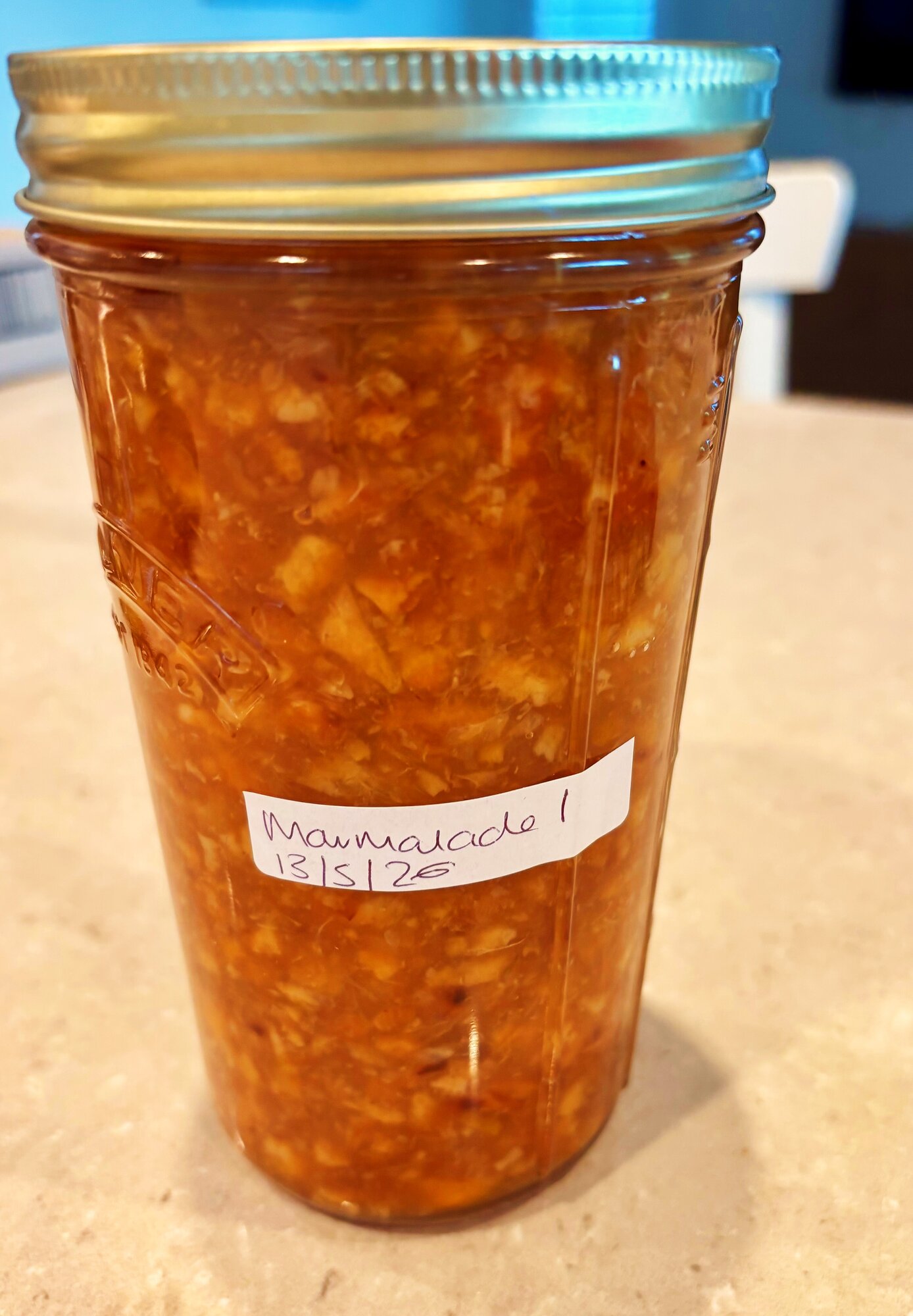
Marmalade 1 is on the shelf, dated for comparison. A few things worth tracking for the next batch:
- Lemon ratio. 2 lemons for 3kg of oranges came out nice – if anything, a shade bitter rather than sweet. Hold the ratio next time, or drop to a single lemon if the bitterness sticks.
- Sugar split. 500/1600 jam-to-plain worked but the set was on the gentle side. Push the jam sugar to 750g and hold the plain at 1.5kg.
- Peel size. The blender’s rough chop gave a fine, slightly cloudy marmalade rather than the classic ribbons of peel. For a chunkier cut, slice by hand instead – but the blender saves the better part of a morning.
- Whisky stirred in off the heat (a couple of tablespoons for the whole batch) adds a warm, faintly smoky edge under the citrus – the grown-up version of the same jar. Didn’t add it to this one; might to the next.